
Interview podcasts need a steady supply of guests, and nonfiction authors make some of the best ones. You've spent years on one subject and can talk about it in depth without notes.
The catch is that hosts receive far more pitches than they can use, and most are generic. If you want to know how to get on podcasts consistently, the answer is to send the other kind: researched, specific and easy to say yes to. This guide covers the full process, from finding shows to repurposing the episode after it airs.
Why should authors and experts be podcast guests?
Podcasts suit nonfiction especially well. A listener spends 30 to 60 minutes hearing how you think, which builds more trust than a social post or a short article.
As a podcast guest you get:
- Long-form attention from people already interested in your topic.
- Evergreen discovery. Episodes stay searchable in podcast apps and on YouTube for years.
- Credibility assets. Each appearance becomes a link, a clip and a line on your media page.
- Practice. Every interview sharpens how you explain your ideas.
Podcasts are a reach and trust channel, not a guaranteed sales channel. Nobody can promise a set number of downloads or book sales from an appearance, and you should be wary of anyone who does.
How to get on podcasts: where do you find shows to pitch?
The goal is a focused list of shows whose listeners are your readers, not the biggest shows you can name. There's no shortage of choice: Listen Notes, a podcast search engine, says it indexes more than 3.8 million podcasts. Your job is to narrow that down.
Where to search
- Podcast apps. Search Apple Podcasts and Spotify for your topic, your readers' problems and books similar to yours. Check the "You might also like" suggestions on good matches.
- Podcast search engines. Search episode titles and transcripts for your topic and for authors who write in your space.
- Comparable authors. Look up two or three authors with books like yours and note every show they've appeared on. Their media pages often list them.
- YouTube. Many podcasts publish full episodes there. Search your topic plus "podcast" or "interview."
- Your own network. Ask clients, colleagues and readers which shows they listen to. Those are the shows your readers trust.
- Guest-matching platforms. Services such as PodMatch connect guests with hosts. They can help, but a personal pitch to a well-chosen show usually beats a profile in a database.
How to vet each show
Before you add a show to your list, check:
- Is it active? Look for an episode in the last 30 to 60 days and a regular schedule.
- Does it interview guests? Some shows are solo or co-host only.
- Does the audience match your readers? Read episode titles and the show description. Would your reader click on those?
- What do guests talk about? If recent guests are similar to you, you're a fit. If you'd be the only author on a show about something else, you probably aren't.
- Is there a booking route? Look for a guest form, a booking email, or a producer's name.
Sort the list into tiers: a handful of reach shows, a core of mid-sized shows that fit perfectly, and some smaller niche shows. Mid-sized and niche shows often book faster and send more engaged listeners.
Key takeaway: Fit beats size. A small show whose listeners are exactly your readers is usually worth more than a large show where you're off-topic.
What should a podcast guest one-sheet include?
A one-sheet is a single page that tells a host who you are and what you'll talk about. Link to it from your pitch rather than attaching it.
Include:
- A headshot and your book cover.
- A one-line description of who you are and what you help people do.
- A short bio of 50 to 100 words. See these author bio examples for formats that read well aloud.
- Three to five talking points, each framed as a listener benefit, not a chapter title.
- Sample questions the host could ask.
- Previous appearances, with links, if you have any.
- Links: website, book page and a short video or audio clip of you speaking.
- Contact details for booking.
Keep it to one page and update it as your angles and appearances grow.
How do you write a podcast guest pitch that gets a reply?
A good podcast guest pitch is short, personal and built around the host's audience. It answers one question: why would this guest make a great episode for my listeners?
Rules that make the difference:
- Address the host by name and mention a specific recent episode.
- Lead with an idea, not your book. Hosts book conversations, not book ads.
- Offer two or three specific angles tailored to their show.
- Give one line of credibility. Why you, on this topic.
- Make it easy. Link your one-sheet and a clip, and offer flexible recording times.
- Keep it under about 200 words.
Template: Personalize every bracket. If you can't fill in the episode reference honestly, you haven't researched the show enough to pitch it.
Subject: Guest idea for [SHOW NAME]: [SPECIFIC ANGLE]

Hi [HOST FIRST NAME],

I listened to your episode with [GUEST] on [TOPIC], especially the part
about [SPECIFIC POINT]. It made me think your listeners might want the
next step: [ONE-LINE IDEA].

I'm [NAME], author of [BOOK TITLE] ([PUBLISHER], [MONTH YEAR]). I've spent
[X years] [RELEVANT EXPERIENCE]. A few angles I could cover:

- [ANGLE 1: a practical how-to for their listeners]
- [ANGLE 2: a counterintuitive idea from your work]
- [ANGLE 3: a story or case study you can tell well]

My one-sheet, with a short clip and past interviews, is here: [LINK]

Happy to work around your recording schedule. Would any of these
fit an upcoming episode?

Thanks,
[NAME]
[WEBSITE]
What to avoid in a pitch
- Mass emails with "Dear Host" or the wrong show name.
- Long biographies before the idea.
- Attachments, especially large press kits.
- Asking the host to read your book before replying.
- Pitching a show you've never listened to.
How should you follow up on a podcast pitch?
Hosts are busy, and many good pitches go unanswered the first time. A polite follow-up is normal and often gets the reply.
A simple rhythm:
- First follow-up after about 7 days. Reply in the same thread with one new detail, such as a fresh angle or a recent appearance.
- Second follow-up after another 7 to 10 days. Keep it to two or three lines and make it easy to decline.
- Then stop. Note the show and try again in a few months with a different angle.
Subject: Re: Guest idea for [SHOW NAME]: [SPECIFIC ANGLE]

Hi [HOST FIRST NAME],

Following up in case this got buried. One more angle that might suit
your listeners: [NEW ANGLE].

If the timing isn't right, no problem at all.

Best,
[NAME]
Track every pitch in a simple spreadsheet: show, host, date pitched, follow-ups, status and air date. It stops double-pitching and shows you which angles land.
When should authors start pitching podcasts around a book launch?
Timing is where many authors lose the benefit of podcast interviews. Shows often record several weeks before an episode airs, and popular shows can book further out.
A practical timeline:
| Weeks before publication | What to do |
|---|---|
| 14–12 | Define angles, build the one-sheet, research and vet shows |
| 12–8 | Pitch your core list; prioritize shows with longer lead times |
| 8–4 | Follow up, schedule recordings, keep pitching smaller shows |
| 4–0 | Record, send prep notes, confirm air dates near launch week |
| After launch | Keep pitching evergreen angles; share every episode as it airs |
To map these steps against your own publication date, our free book launch timeline calculator gives you a dated plan.
Tip: Ask hosts about their air date when you book. If the episode would land well after launch, it's still worth doing, but fill launch week with shows that publish faster.
How do you get booked on podcasts again and again?
Getting booked once is a pitch problem. Getting booked repeatedly is a reputation problem. Hosts talk to each other and often recommend guests they enjoyed.
Before the interview
- Listen to at least one full episode and note the host's style and segments.
- Send a short bio and a correctly pronounced name.
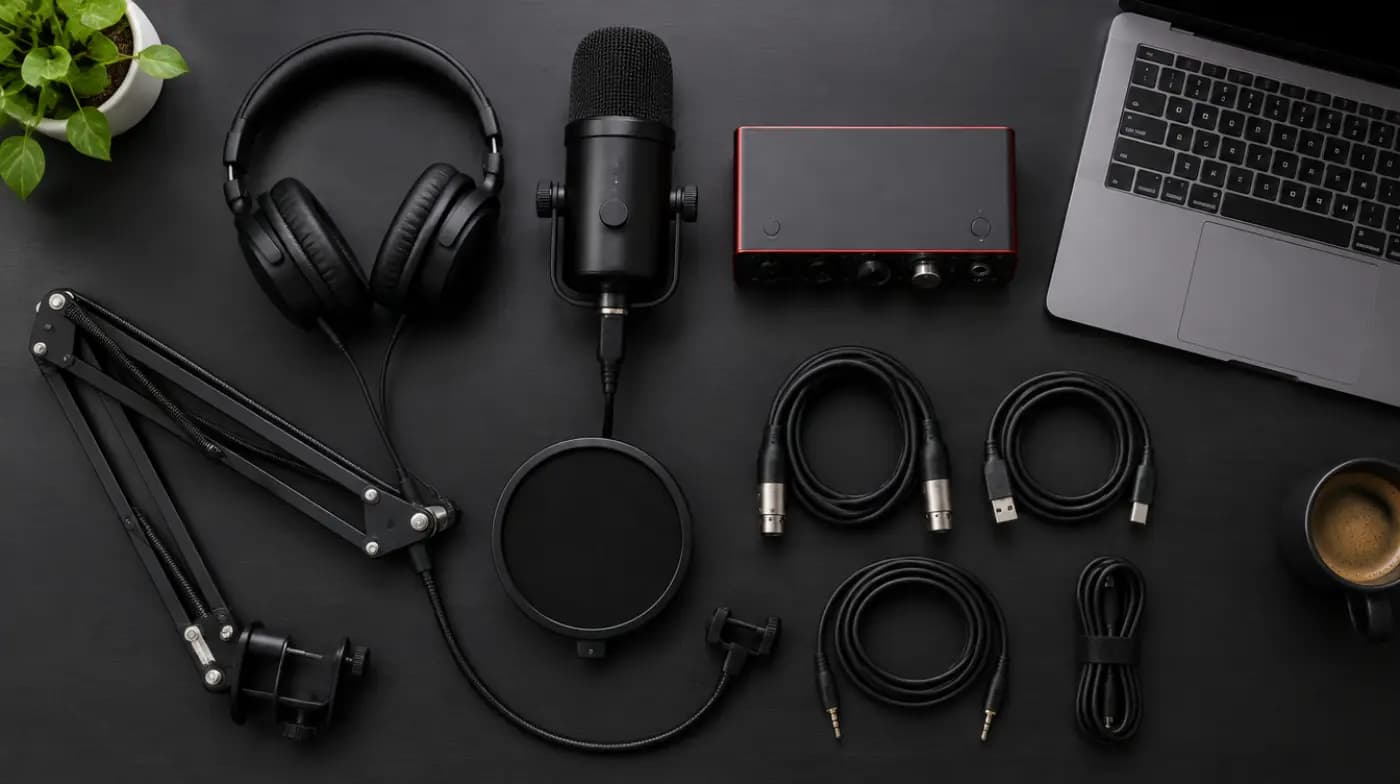
- Test your audio. A USB dynamic mic, wired earbuds and a quiet room make a large difference.
- Prepare two or three short stories and one clear, practical takeaway.
During the interview
- Answer the question asked, then add your idea. Don't steer every answer to your book.
- Use stories and concrete examples. They're what listeners remember and what clips well.
- Keep answers to a few minutes so the conversation flows.
- Mention your book naturally once or twice, and give one simple next step at the end, such as your website.
After the interview
- Thank the host the same day.
- Share the episode when it airs, tagging the show.
- Recommend another strong guest to the host. It builds goodwill fast.
How do you repurpose a podcast appearance?
Each episode is raw material for weeks of content. Most guests share once and stop, which wastes most of the value.
- Add it to your media page with the show logo and a link.
- Cut short clips of your best answers for social video, with captions.
- Write a newsletter issue around one idea from the conversation and link the episode.
- Turn an answer into an article or a LinkedIn post.
- Use it in future pitches as proof you're a strong guest.
- Quote it in your book marketing where appropriate, with the host's permission for any extended use.
Can you be a guest on the Author Talking podcast?
Yes, if you're a nonfiction author with an idea worth a long conversation. We interview authors in business, leadership, careers, money, psychology, health and tech, and guests never pay to appear. You can apply to be a guest on our show.
Should you do it yourself or hire help?
Everything in this guide is doable on your own. It mainly takes time: researching shows, writing personal pitches, following up and scheduling can add up to several hours a week during a launch.
If you'd rather spend that time writing and recording, a podcast book tour handles the research, one-sheet, pitching, follow-ups and scheduling around your launch dates. For ongoing appearances beyond a launch, our podcast booking agency runs the same process month to month. Either way, the method is the one above, and no reputable service should promise you specific bookings, downloads or sales.