
Most books don't fail because they're bad. They fail because too few of the right people hear about them, and the author ran out of ideas or energy after launch week.
This list of book promotion ideas fixes the first problem. There are 45 tactics below, grouped by cost (free, low-cost, paid) and then mapped to launch stage, with an effort-versus-impact table so you can choose a short list instead of trying everything.
How should you choose book promotion ideas?
Before the list, a filter. Good book promotion meets three tests:
- It reaches your actual readers. A huge audience of the wrong people sells nothing.
- It leaves something behind. An email subscriber, a review or an evergreen episode keeps working after the moment passes.
- You can sustain it. Three tactics done well for six months beat ten done once.
Key takeaway: Pick two "borrowed audience" tactics (podcasts, guest articles, partner newsletters), one "owned audience" tactic (your email list) and one "proof" tactic (reviews). That's a complete plan.
What are the best free book promotion ideas?
Free book promotion costs time, not money. These are where most authors should start.
Borrowed audiences
- Podcast guesting. Interview shows need guests, and nonfiction authors make excellent ones. Listeners hear you for 30 to 60 minutes, which builds more trust than any ad. Here's a full guide on how to get booked on podcasts.
- Guest articles. Write a useful, bylined piece for a publication or blog your readers follow, with a bio link to your book.
- Newsletter swaps. Trade mentions with an author whose readers overlap with yours.
- Expert quotes for journalists. Respond to reporter requests in your subject area; your book title goes in the credit line.
- Webinars with partners. Teach a session for an association, company or community that serves your readers.
- Guest posts on industry blogs. Especially effective for business, career and tech books.
- Local media. Pitch a hometown angle to local newspapers, radio and TV.
- Alumni magazines and networks. Universities and former employers often feature alumni authors.
Owned channels
- An email list with a free chapter. Your most valuable long-term asset. Offer chapter one or a related checklist in exchange for an email.
- Your author website. Make sure it has a buy button and a sign-up form on the homepage.
- A launch-week email series. Three to five emails to your list about why the book exists and what readers will get.
- Email signature. Add the book, a one-line hook and a link. Every email you send becomes a quiet promotion.
- LinkedIn posts. For business nonfiction, short posts sharing one idea from the book work well.
- One social platform, done consistently. Choose the one your readers use most and post useful excerpts.
- Short video clips. Record 60-second explanations of key ideas from the book.
Proof and community
- Advance reader copies to your network. Give early copies to people likely to leave honest reviews at launch. More in our guide to getting book reviews.
- A launch team. Recruit 20 to 100 readers who get early access and help spread the word.
- Endorsements. Ask respected people in your field for a blurb months before publication.
- Book clubs. Offer to join a reading group by video for a discussion.
- Library talks. Libraries run free public programs and can order your book.
- Bookstore events. See these book signing ideas for formats that bring people in.
- Goodreads author profile. Claim it, add your bio and answer reader questions.
- Online communities. Contribute helpfully in forums and groups where your readers gather; mention the book only when relevant.
What are good low-cost book promotion ideas?
These typically cost tens to a few hundred dollars and work best around launch.
- Printed ARCs or ebook ARCs for reviewers and influencers.
- Goodreads giveaways. Paid listings that put the book in front of readers who mark it "Want to Read." Our Goodreads giveaway guide covers how they work.
- Bookmarks and postcards with a QR code for events and mailings.
- A reader magnet delivery service to send free chapters and ARCs securely.
- Bulk copies for corporate workshops. A small discount on 20 to 50 copies can turn into a training session.
- Pre-order bonuses. A worksheet pack, video lesson or Q&A call for anyone who pre-orders.
- Ebook price promotions. A short discount on the ebook, announced to your list and partners.
- Kindle Free Book Promotions. If your ebook is enrolled in KDP Select, Amazon lets you make it free for up to five days in each 90-day enrollment period.
- Kindle Countdown Deals. A time-limited discount with a countdown clock, also a KDP Select benefit, available only in the Amazon US and UK stores.
- Paid newsletter deal sites. Services that email discounted books to subscribers in your genre or category.
- Conference sponsorship or a table at a small industry event your readers attend.
Tip: Kindle book promotion through KDP Select has a cost that isn't money. Enrolling commits the ebook to Amazon exclusively for the enrollment period, so you can't sell the ebook on other stores or your own site at the same time. Print editions aren't affected.
Which paid book promotion is worth it?
Paid tactics amplify what already works. Spend here once the book has reviews, a strong cover and a sales page that converts.
- Amazon Ads. Target keywords and comparable titles. Start small and cut what doesn't sell.
- BookBub Featured Deals. A selective, paid email feature for discounted ebooks; books must be free or at least 50% off, and nonfiction titles at least 100 pages.
- BookBub Ads. Self-serve ads shown to BookBub readers.
- Facebook and Instagram ads. Useful for reaching specific interests, but test with modest budgets.
- LinkedIn ads. Expensive per click, but precise for professional audiences.
- Sponsored newsletter placements. Buy a mention in a niche newsletter your readers trust.
- Podcast advertising. A host-read ad on a relevant show.
- A book publicist. For media coverage, interviews and reviews over a campaign.
- A podcast booking service. Someone else researches shows, pitches and schedules your interviews.
- Professional audiobook production. A new format opens a new audience of listeners.
- Bulk sales outreach. Pitch companies and associations on buying copies for teams or members.
Which book promotion ideas fit each launch stage?
Knowing how to promote a book is partly knowing when. Most tactics work best at a specific stage.
| Stage | Timing | Best ideas from the list |
|---|---|---|
| Pre-launch | 3–6 months before | 1, 2, 9, 10, 16, 17, 18, 24, 29 |
| Launch | Launch week ± 2 weeks | 1, 3, 11, 13, 21, 25, 30, 31 |
| Post-launch | 1–6 months after | 4, 5, 19, 20, 28, 32, 35, 36 |
| Evergreen | Ongoing | 2, 6, 9, 12, 14, 15, 23, 45 |
Pitching podcasts and publications early matters most, because many shows record weeks before an episode airs. Starting three months out is what puts your interviews live during launch week.
What is the effort vs impact of each book promotion idea?
Use this to choose your short list. "Impact" here means likely effect on reaching new, relevant readers, based on how each channel works, not on a guaranteed sales number. Results vary by book, audience and execution.
| Tactic | Cost | Effort | Typical impact | Lasts? |
|---|---|---|---|---|
| Podcast interviews | Free (or paid booking help) | Medium–high | High | Yes, episodes stay online |
| Guest articles | Free | Medium | Medium–high | Yes |
| Email list + free chapter | Low | Medium | High over time | Yes |
| Early reviews / ARCs | Low | Medium | High (enables everything else) | Yes |
| Launch team | Free | High | Medium–high at launch | Partly |
| Newsletter swaps | Free | Low | Medium | No |
| Social media posting | Free | High (ongoing) | Low–medium | No |
| Bookstore and library events | Free–low | Medium | Low–medium (local) | No |
| Goodreads giveaway | Low | Low | Low–medium | Partly |
| Kindle free or Countdown deals | Low | Low | Medium (ebook) | No |
| Amazon Ads | Paid | Medium | Medium when reviews are in place | No |
| BookBub Featured Deal | Paid, selective | Low | High if accepted | No |
| Social ads | Paid | Medium | Variable | No |
Key takeaway: The highest-impact, longest-lasting tactics are podcasts, articles, your email list and early reviews. Ads and deals are better as boosters on top of those.
How do you build a book promotion plan from this list?
Turn the list into a plan in five steps:
- Write your reader profile. Who they are, what they listen to, read and follow.
- Pick four tactics using the takeaway above: two borrowed audiences, one owned, one proof.
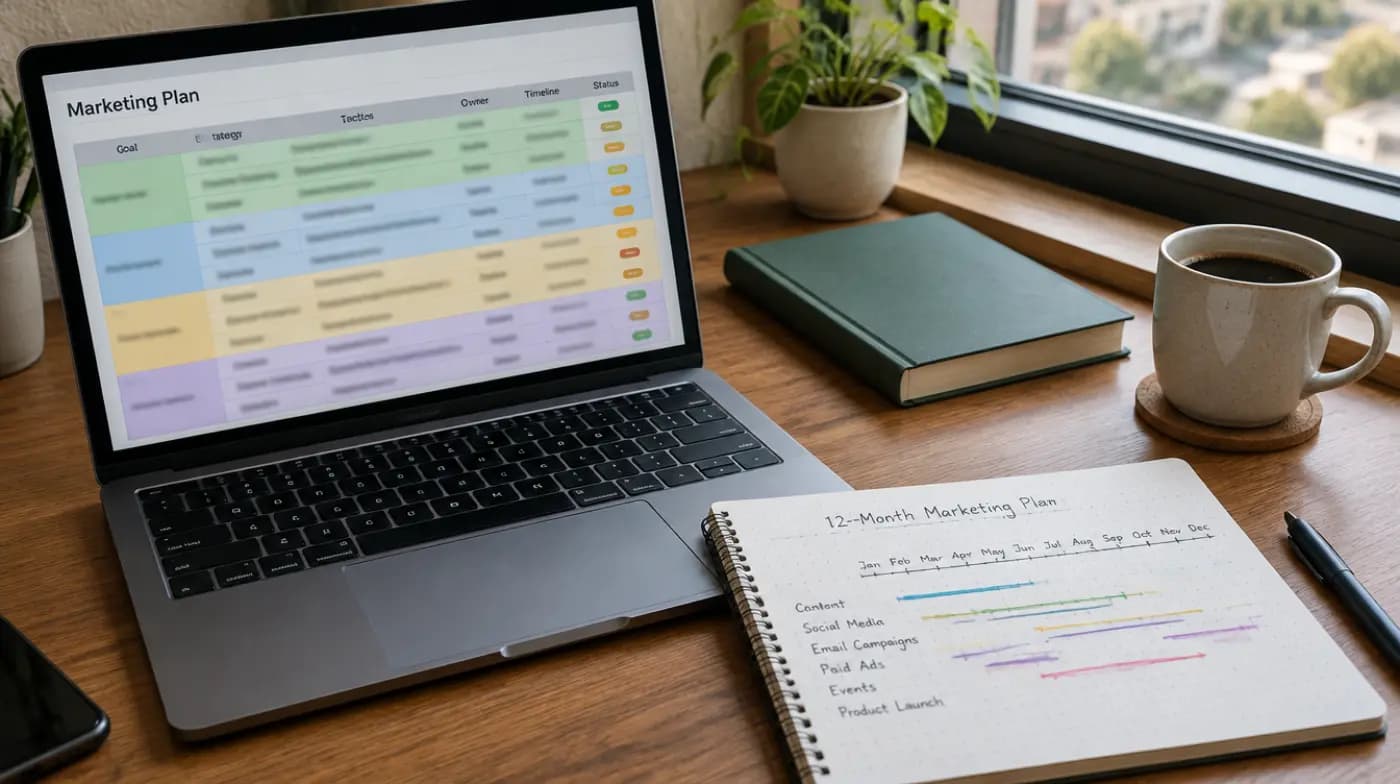
- Put dates on everything. Work backward from publication day.
- Set a weekly minimum. For example, three podcast pitches, one article pitch and one list email per week.
- Review monthly. Keep what brings readers, drop what doesn't, then add one new tactic.
Repeat the cycle for six months. Most nonfiction books sell over years, not weeks, and the authors who keep promoting after launch are the ones who keep selling.
What mistakes should you avoid when promoting a book?
- Promoting only in launch week, then stopping.
- Buying ads before you have reviews. Clicks land on a page with no social proof.
- Pitching every podcast you find. Fit matters more than size.
- Talking about the book instead of the reader's problem. Lead with the idea, not the product.
- Not capturing emails. Every promotion should give people a way to stay in touch.
If podcast interviews are the idea you'd most like to scale but don't have time to research and pitch shows, our podcast book tour service handles the show list, pitching and scheduling. It's one tactic among many, and the rest of this list works whether or not you hire help.