
An email list is the one audience no algorithm can take away from you. But a list only helps if people open what you send, and most authors stall on the same question: what do I actually write?
These author newsletter examples answer it. Below are 12 formats with sample emails, 30 content ideas, a welcome sequence template, list-building tactics and platform notes. Every author in the samples is fictional; borrow the structure, not the details.
What makes a good author newsletter?
A strong author newsletter is built around the reader, not the book. People subscribe for a feeling or a benefit: to learn something, be entertained, or feel connected to someone they admire.
Good ones share four traits:
- A recognizable format. Readers know what they'll get each time.
- One idea per issue. Short beats comprehensive.
- A human voice. It should sound like you talking, not a press release.
- One clear next step. Reply, read, share or buy. Pick one.
Key takeaway: Your book is the product; your newsletter is the relationship. Give value in roughly four of every five emails, and the fifth (the one with book news) gets read.
What are the best author newsletter examples? 12 formats
Each format below includes a short sample email. All authors and books are invented for illustration.
1. The one-idea essay
A short essay of 300 to 600 words on one idea related to your book. Ideal for business, psychology and self-help authors.
Subject: The 2-minute rule for hard conversations

Hi Sam,

Most managers delay hard conversations because they picture
the whole thing: the reaction, the awkward silence, the fallout.

Try this instead: commit to only the first two minutes. Open
with what you noticed, then ask one question. That's it.

In my research for Clear Talk, managers told me the hardest
part was the first sentence. Make it small and it gets said.

What's one conversation you've been putting off?
Hit reply. I read every one.

— Dana Ruiz (fictional author)
2. The "3 things" roundup
Three short items: an idea, a resource and a question. Fast to write and easy to skim.
Subject: 3 things on saving more this month

1. An idea: Automate the transfer the day you're paid, not
   the day you remember.
2. A tool I like: A simple spending tracker spreadsheet
   (my template is linked below).
3. A question: What's one subscription you'd cancel today
   if no one asked why?

— Priya Shah (fictional author)
3. The behind-the-book note
Share what's happening as you write, edit or launch. Readers love seeing how books get made.
Subject: I cut chapter 7 (here's why)

Chapter 7 was 9,000 words. Today it's gone.

My editor asked one question: "What does the reader do
differently after this chapter?" I didn't have an answer.

Some of its best stories moved into chapters 3 and 9.
The rest goes into a free bonus PDF for subscribers when
the book is out. You'll get it first.

— Marcus Lee (fictional author)
4. The reader Q&A
Answer one question from a subscriber. It rewards replies and gives you endless material.
Subject: "How do I ask for a raise when the budget is frozen?"

A reader asked this last week, and it's a great one.

Short answer: don't ask for money first. Ask what success
looks like in your role for the next six months, get it in
writing, then set a date to revisit pay when you've hit it.

Send me your question. I answer one every month.

— Elena Brooks (fictional author)
5. The case breakdown
Break down a public example (a company decision, a historical event, a common situation) through the lens of your book.
6. The "what I'm reading" list
Recommend three to five books, articles or podcasts with one line on why each matters. Builds goodwill with other authors, too.
7. The mini-lesson series
A multi-part course across several issues, such as "five emails on building a morning routine." Good as a lead magnet as well as a regular feature.
8. The personal update
A short, honest note on life, travel or what you're thinking about. Works best mixed with other formats, not as the only one.
9. The interview or guest feature
Interview someone your readers would learn from, or share highlights from your own podcast appearances.
Subject: I talked about burnout on a podcast this week

This week I joined a leadership show to talk about the
early warning signs of burnout most teams miss.

The best moment came at 18:40, when the host asked what
to do if the burned-out person is you. My answer surprised
me a little.

Listen here: [episode link]

— Jordan Park (fictional author)
10. The worksheet or template drop
Send a downloadable resource tied to the book: a checklist, script or planner.
11. The milestone and launch email
Book news, done well: cover reveal, pre-order bonus, launch day, first review. Keep these rare so they stand out.
Subject: It's here (and a thank-you gift inside)

Today Clear Talk is officially out.

You've read these emails for a year, so you get the gift
first: a printable "first two minutes" script card.
Download it here: [link]

If you'd like the book, it's at your favorite bookstore
or here: [link]. And if you read it, an honest review
helps more than you'd think.

Thank you for being here.
— Dana Ruiz (fictional author)
12. The curated link digest
A weekly or monthly list of links worth reading in your field, each with a sentence of commentary. Easy to sustain and good for niche experts.
What should you write about? 30 author newsletter ideas
When you're stuck, pull one of these author newsletter ideas.
Ideas from the book
- One key idea, explained in 300 words
- A story that didn't make the final cut
- A common misconception in your field
- A framework from the book, applied to a new situation
- A chapter-opening excerpt
- The research finding that surprised you most
- A myth readers believe, and why it's wrong
Behind the scenes 8. How you got the idea for the book 9. Your writing routine or workspace 10. Choosing the title or cover 11. An edit you fought for (or lost) 12. What launch week actually looks like 13. A mistake you made and what it taught you
Reader-focused 14. Answer a reader's question 15. Share a reader's story (with permission) 16. Run a poll and report results next issue 17. A challenge readers can try this week 18. A free worksheet or template 19. A reading list for beginners in your topic
Timely 20. Your take on a current news story in your field 21. Seasonal advice (year-end planning, back-to-school, tax season) 22. Lessons from an event or conference you attended 23. A podcast interview you did, with the best moment timestamped 24. A guest article you wrote, with extra notes
Community and recommendations 25. Three books you're recommending this month 26. An interview with another expert 27. A tool you use every day 28. Spotlight on a fellow author's new book
Book milestones 29. Cover reveal or pre-order bonus 30. Launch day, first-review celebration or anniversary edition
How do you start an author newsletter from scratch?
Here's how to start an author newsletter in seven steps.
- Choose a platform (see notes below) and use your own domain for the sending address if you can.
- Define the promise. One sentence: "Every other Tuesday: one idea to help new managers lead with less stress."
- Pick one format from the list above and a schedule you can keep.
- Create a lead magnet, such as a free chapter, checklist or short email course.
- Write a welcome sequence (template below) so new subscribers get value immediately.
- Add sign-up forms to your website, social bios and email signature.
- Send your first issue, even to 20 people. The habit matters more than the size.
What should an author welcome sequence say? A template
A welcome sequence is a short series of automated emails sent to every new subscriber. It sets expectations and delivers your best material first.
Template: Four-email welcome sequence
EMAIL 1 (immediately)
Subject: Here's your [free chapter/checklist]
- Deliver the promised resource (link).
- One line on who you are and why you write about [topic].
- What to expect: "[format], every [schedule]."
- Ask: "Hit reply and tell me [one question about their situation]."

EMAIL 2 (day 2)
Subject: The idea that started [Book Title]
- The origin story in 200 words.
- One useful takeaway they can try today.

EMAIL 3 (day 5)
Subject: My 3 most-read [essays/lessons]
- Link your three best pieces of content, one line each.
- Light mention: "These ideas come from [Book Title]: [link]."

EMAIL 4 (day 9)
Subject: A quick question
- Ask what they're struggling with most around [topic].
- Tell them the next regular issue arrives [day].
Tip: Replies help. When subscribers reply to an early email, you learn what they want, and you get topic ideas for months.
How do you grow an author email list?
A great format needs readers. These list-building tactics work for most nonfiction authors:
- Offer a specific lead magnet. "Get the first chapter free" beats "Subscribe for updates."
- Put the form above the fold on your homepage. These author website examples show where strong sites place it.
- Mention it in every interview. On podcasts, give one memorable URL for a free resource rather than "find me online."
- Add it to the back of your book, with a reason to sign up (bonus material, a toolkit).
- Use a QR code at events. Bring it to every signing and talk; these book signing ideas include a raffle-for-email approach.
- Swap recommendations with authors whose readers overlap with yours.
- Use a reader magnet service. Tools like BookFunnel deliver free ebooks and run group promotions where authors share each other's books with their lists.
- Link it from guest articles in your author bio.
For a full list of channels that send readers your way, see our roundup of book promotion ideas.
Which platform should you use for an author newsletter?
Most authors do fine on any mainstream tool. What matters is a free or low-cost start, good sign-up forms and basic automation for a welcome sequence. Plan details change often, so confirm current terms before you choose; the notes below were checked in October 2026.
| Platform | Free tier (at time of writing) | Good for | Note |
|---|---|---|---|
| Kit | Free Newsletter plan for up to 10,000 subscribers, per Kit's help center | Creators who want forms, landing pages and automation in one place | Free users are part of Kit's recommendation network |
| MailerLite | Free plan listed at 250 subscribers and 2,500 emails per month on MailerLite's pricing page | Simple, affordable sending with a basic landing page | Free plan includes limited automations |
| Substack | Free to publish; Substack takes a 10% fee on paid subscriptions | Authors who want a public archive and the option to charge | Less control over forms and segmentation |
| Your website's built-in email | Varies by platform | Keeping everything in one place | Often limited automation |
Whatever you pick, export your subscriber list regularly. Your list belongs to you, not the platform.
What author newsletter mistakes should you avoid?
- Only sending when you have news. Silence for months, then "buy my book," gets unsubscribes.
- Writing too much. Most issues should be readable in two or three minutes.
- No consistent format. Readers can't form a habit around randomness.
- Hiding the sign-up form. If people can't find it, they can't join.
- Ignoring replies. Answering a few personally builds loyal readers.
How does a newsletter fit into your launch?
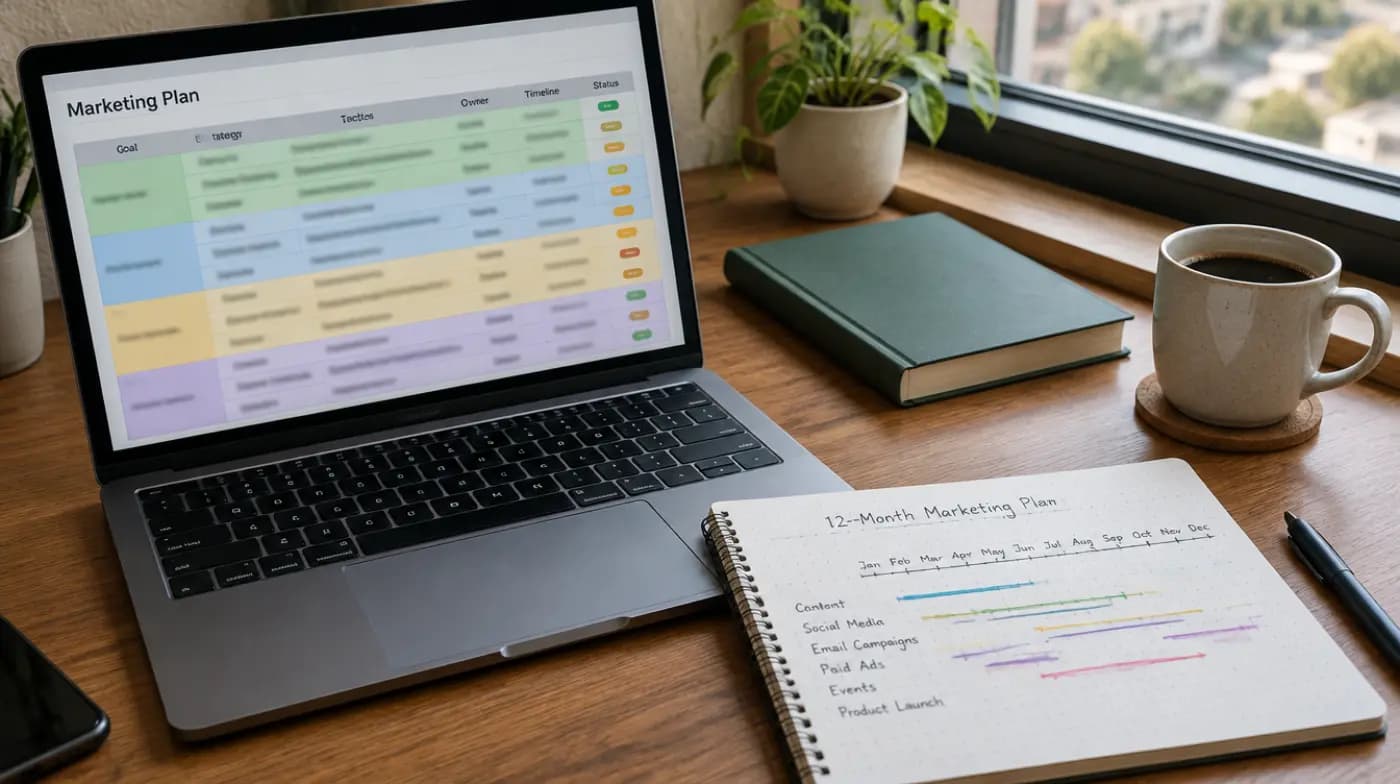
Your newsletter is where everything else lands. Podcast listeners, article readers and event guests become subscribers, and subscribers become your first buyers and reviewers. Map your launch emails against the rest of your plan with the free book launch timeline tool.
If you're a nonfiction author with ideas worth a long conversation, you can also apply to be interviewed on the Author Talking podcast. Guests never pay, and the episode makes a good issue for your own newsletter.