
Most people have read an ebook without thinking much about what it actually is. But if you are writing a book, or deciding whether to buy a Kindle, the details matter: what the file is, where it lives, and what you can and can't do with it.
So, what is an ebook? This guide gives you the plain definition first, then explains how ebooks work, how they compare with print books and audiobooks, and how authors use them.
What is an ebook? (Ebook meaning and definition)
The short ebook definition: an ebook is a book in digital form, designed to be read on an electronic screen. "Ebook" is short for electronic book, so if you are wondering what does ebook stand for, that is the whole answer.
You might type it as "what is a ebook", "whats an ebook" or "what is ebook means". They all lead to the same place. The ebook meaning is simply the book itself, delivered as a file instead of printed pages.
An ebook usually has everything a print book has: a cover, a title page, a table of contents, chapters and an author bio. What it adds is digital behavior. You can change the font size, search the text, tap a word to see its definition, highlight passages and jump to any chapter from the contents.
Key takeaway: An ebook is a book, not a format. The same manuscript can become a paperback, a hardcover, an audiobook and an ebook. The ebook is the version that lives as a digital file.
What does ebook mean in everyday use?
In practice, people use the word in two slightly different ways.
- A digital edition of a regular book. A novel or a business book that also exists in print, sold on Kindle, Apple Books, Kobo or Google Play Books.
- A digital-only publication. A guide, report or short book that only ever exists as a file. Many businesses give these away in exchange for an email address.
Both count. What matters for what does ebook mean is that the reader consumes it on a screen, and the content is book-like: long-form and structured into chapters.
What is an ebook and how does it work?
If you want to know what is a ebook and how does it work, think of it as three parts: a file, a reading device or app, and (often) a lock on the file.
The file
An ebook is a packaged file. Under the hood, the most common format, EPUB, is essentially web content (HTML and CSS, plus images) zipped into a single file. EPUB is an open standard maintained by the W3C, the same body that sets web standards.
Most ebooks use reflowable text. That means the words rewrap to fit the screen, so the "page" on a phone is smaller than the page on a tablet. Some books, such as children's picture books, cookbooks or workbooks, use a fixed layout instead, where each page looks exactly as designed.
The format basics
You don't need to know every ebook format, but a few names come up constantly:
- EPUB: the open standard used by Apple Books, Kobo, Google Play Books and most other stores and library systems.
- Kindle formats: Amazon converts books into its own formats for Kindle devices and apps.
- PDF: a fixed page layout. It works as an ebook, but it doesn't reflow on small screens.
For authors, Amazon's Kindle Direct Publishing lists DOC/DOCX, Kindle Package Format (KPF) and EPUB among its suggested manuscript formats, and it also accepts PDF, HTML, RTF and plain text, according to KDP's own help page. The same page notes that, since March 2025, it no longer accepts MOBI files for fixed-layout ebooks.
The device or app
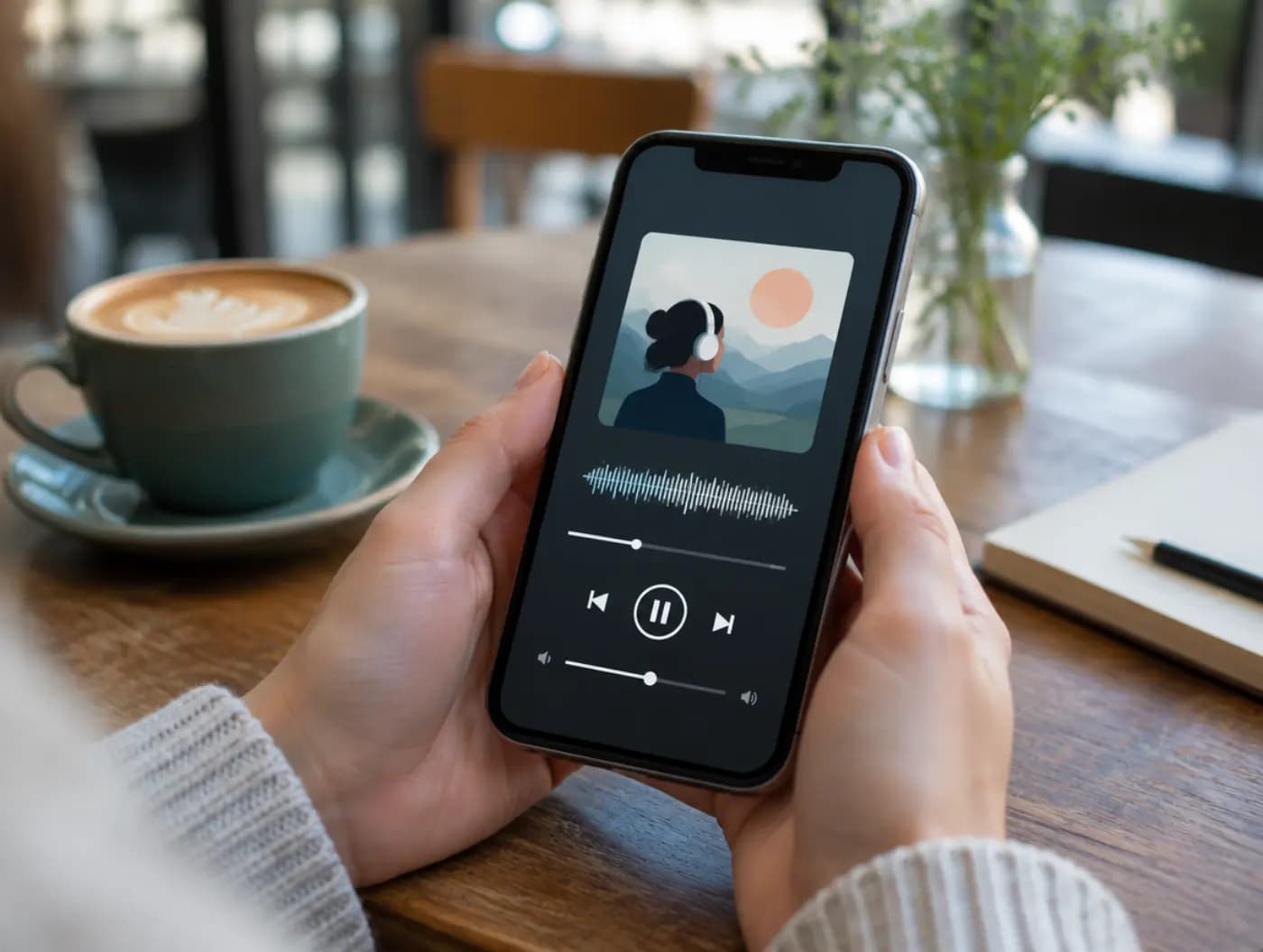
You read an ebook through software that opens the file. That could be a dedicated e-reader, a reading app on a phone or tablet, or a browser on a computer. Your library of purchased books usually syncs across all of them, so you can start on a Kindle and finish on your phone.
DRM: the lock on the file
Many store-bought ebooks come with DRM (digital rights management). DRM ties the file to your account, so you can read it on your own devices but can't freely copy or share it.
This is the biggest practical difference from a paper book. You are typically buying a license to read the ebook in that store's ecosystem, not a file you can move anywhere. Some independent authors and publishers sell DRM-free ebooks, which you can open in any compatible app.
What does an ebook look like?
On an e-reader, an ebook looks like a clean page of text in a book-style font, with a small progress bar or page number at the bottom. You turn pages by tapping or swiping.
On a phone or tablet, it looks much the same, with options for dark mode, sepia backgrounds and font choices. Open the menu and you see the cover, the table of contents, your bookmarks and your highlights.
A PDF ebook looks different: it shows the full designed page, margins and all, and you zoom or scroll to read it. That is the easiest way to tell the two apart.
What is an ebook reader?
So what is an ebook reader? It is either a device or an app built for reading ebooks.
- E-reader devices, such as Kindle and Kobo, use an e-ink screen that looks like paper, is easy on the eyes in daylight, and lasts weeks on a charge.
- Reading apps, such as Kindle, Apple Books, Google Play Books, Kobo and Libby, turn any phone, tablet or computer into an ebook reader.
You don't need a dedicated device. Many readers start with a free app on their phone and only buy an e-reader if they find themselves reading a lot.
Ebook vs physical book vs audiobook: what is the difference?
Here is how the three main editions compare. This table covers the ebook vs physical book question (paperback or hardcover) and ebook vs audiobook side by side.
| Ebook | Print book (paperback / hardcover) | Audiobook | |
|---|---|---|---|
| How you consume it | Read on a screen | Read on paper | Listen through an app or device |
| Delivery | Instant download | Shipped or bought in a store | Instant download or stream |
| Typical price | Often the lowest of the three | Higher, includes printing and shipping | Often the highest to buy |
| Text size and search | Adjustable, fully searchable | Fixed, no search | Not applicable |
| Ownership | Usually a license, often with DRM | You own the object; can lend or resell | Usually a license, often with DRM |
| Best for | Travel, heavy readers, quick access | Gifting, signing, reference, note-taking | Commutes, workouts, multitasking |
| Cost to produce (for authors) | Low: editing, cover, formatting | Higher: print-ready design, printing | Highest: narration and audio production |
Ebook vs paperback and ebook vs paper book
The ebook vs paperback choice mostly comes down to habit. Paper is easier for skimming, writing in margins and lending to a friend. Ebooks win on price, portability and instant access. Plenty of readers buy the ebook vs paper book format based on the situation: ebook for travel, print for a book they want to keep.
Ebook vs audiobook
An audiobook is the same book read aloud by a narrator. It suits people who "read" while driving or exercising. The ebook is better for books you want to study, quote or reference, because you can search and highlight.
How is an ebook different from a PDF, a flipbook or a whitepaper?
These terms get mixed up, especially in business publishing.
- Ebook vs PDF: A PDF is one file type an ebook can use. A store-bought ebook is usually EPUB or Kindle format with reflowable text, while a PDF keeps a fixed page layout.
- Ebook vs flipbook: A flipbook is a PDF or set of pages displayed online with a page-turning animation, usually inside a browser. It looks like a magazine. An ebook is a downloadable book you open in a reading app.
- Ebook vs whitepaper: A whitepaper is a shorter, more technical report that argues a position or explains a problem, often for B2B buyers. A business ebook is usually broader, friendlier and more book-like, with chapters.
Tip: If you are a consultant or coach writing a "lead magnet", call it an ebook only if it reads like a short book. If it is a ten-page technical argument, whitepaper or guide is the more honest label.
What are the pros and cons of ebooks?
Pros
- Instant and portable. Buy and start reading in seconds, and carry hundreds of books on one device.
- Adjustable. Change text size, font and background, which helps readers with low vision.
- Searchable. Find a passage, a name or a quote immediately.
- Often cheaper. Especially for self-published titles and library loans.
- Low cost to publish. No printing, warehousing or shipping.
Cons
- Licensing, not owning. DRM often limits lending, reselling and moving books between platforms.
- Screen fatigue. Reading on a backlit phone for hours is tiring for some people. E-ink helps.
- Weaker for some content. Complex tables, design-heavy books and workbooks can look poor in reflowable formats.
- No physical presence. You can't sign an ebook at an event or put it on a shelf behind you on a video call.
How do authors use ebooks?
For authors, the ebook is usually the cheapest and fastest edition to produce. If you are self-publishing, you can upload a finished, formatted manuscript to the major stores and have it on sale within days. Our guide on how to publish a book walks through the three publishing paths and where ebooks fit in each.
Authors commonly use ebooks in a few ways:
- As one edition of the main book. Publish ebook, paperback and audiobook together, so readers can choose.
- As a launch tool. A lower ebook price during launch week can help a new book gather early readers and reviews. See our book marketing plan template for how pricing fits into a launch.
- As a lead magnet. A short free ebook, such as a chapter or a companion guide, offered in exchange for an email address to grow a list. Our author newsletter examples show what to send once people sign up.
- As a test. Publish a short ebook on a narrow topic to see whether readers care before writing the full book.
Ebook costs are mostly editing, cover design and formatting, which is why they are the most affordable edition. For a full breakdown, read what it costs to publish a book.
Key takeaway: The ebook rarely makes an author's career on its own, but it is the edition with the lowest cost, the widest reach and the fastest path to market.
How do you get and read an ebook?
There are three common routes.
Buy one from an ebook store
Kindle, Apple Books, Kobo and Google Play Books all sell ebooks. Create an account, buy the book, and it appears in that store's app on all your devices.
Borrow one from the library
So what is an ebook from the library? It is a digital loan of a book your public library has licensed. With a library card, you can borrow ebooks, audiobooks and magazines through the free Libby app. According to Libby's help pages, it runs on iOS, Android, newer Fire tablets and in a web browser, and loans return automatically on their due date, so there are no late fees.
Download free or author-direct ebooks
Many authors sell ebooks directly from their own websites, or give away short ebooks to newsletter subscribers. These are often DRM-free PDF or EPUB files you can open in any compatible reading app.
Is Ebook Basic (or Ebook Basics) legit?
People often search "ebook basic legit", "is ebook basics legit" or "ebook basic reviews". These searches usually refer to sites selling ebook versions of textbooks and popular books as downloadable PDFs at a fraction of the publisher's price.
We haven't verified that sites like this are authorized by the publishers whose books they sell, so we can't call them legit. Reviews on their own don't settle the question, because what matters is whether the seller has the right to sell the book.
A simple test: if a site sells a new textbook PDF for a small fraction of the price charged by the publisher, Amazon, VitalSource or your campus store, ask yourself how it can. For textbooks, safe options are the publisher's own site, major ebook stores, rental programs and your college or public library.
What should you do next?
If you are a reader, the easiest next step is to install a free reading app or Libby and try an ebook on the device you already own.
If you are an author, plan your ebook alongside your print and audio editions rather than as an afterthought, and think about how readers will discover it. Ebooks sell best when readers already know the author, which is why many nonfiction authors pair their launch with interviews on podcasts their readers already listen to. If that is the part you want help with, our podcast book tour books those interviews around your launch dates.